







Gold prices held firm above $2,900, stabilizing after an intraday pullback from record highs as investors assessed the outlook for monetary policy and global economic risks. The metal initially faced some selling pressure, but safe-haven demand remained intact, preventing a deeper decline.
The pullback was largely driven by profit-taking after gold’s recent surge, as traders locked in gains following its rally to an all-time high. However, the weaker US dollar and persistent geopolitical tensions kept buying interest alive, limiting losses and keeping gold on track for weekly gains.
Market focus remains on the Federal Reserve’s policy outlook, with expectations of potential rate cuts later in the year fueling gold’s appeal. Lower interest rates reduce the opportunity cost of holding non-yielding assets, supporting prices in the longer term. Any surprises in upcoming US economic data could further shape market expectations.
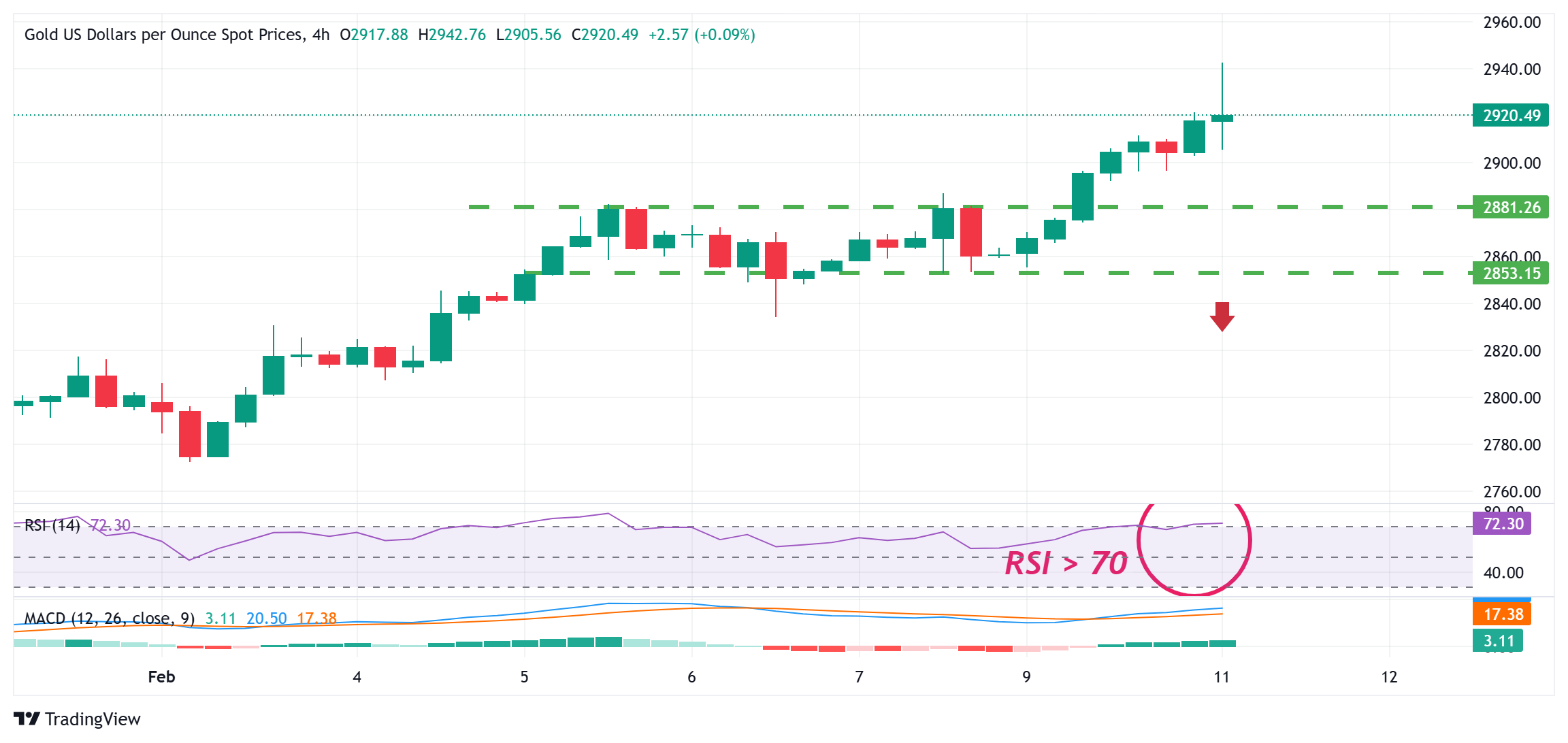
Gold US DOLLARS 1-D Chart as of February 11th, 2025 (Source: TradingView)
Meanwhile, central bank demand, particularly from China, continues to provide strong support for gold. The People’s Bank of China has been steadily increasing its reserves, reinforcing the metal’s role as a key asset amid global uncertainty. Analysts suggest that as long as central banks remain active buyers, gold’s downside will be limited.
Technical indicators suggest that gold’s bullish trend remains intact, with support around $2,880 and the next key resistance level near $2,950. While momentum may slow in the short term, investors remain cautious of any renewed volatility that could drive another breakout toward fresh highs.
With financial markets on edge, gold is expected to remain in focus as traders monitor economic data, geopolitical risks, and central bank actions. As long as uncertainty persists, gold’s safe-haven status is likely to keep demand elevated, making any dips attractive for buyers.