






Gold prices extended their decline on Wednesday, falling to a two-week low, as the US dollar strengthened ahead of the highly anticipated Personal Consumption Expenditures (PCE) price index release. With traders positioning for fresh signals on inflation and the Federal Reserve’s next move, demand for the safe-haven metal has taken a hit.
The dollar’s resilience has been a key factor pressuring gold, as expectations for the Fed’s policy path remain in focus. Recent US economic data has shown sticky inflation and a still-resilient labor market, leading investors to temper expectations of early or aggressive rate cuts. As a result, US Treasury yields have remained firm, making non-yielding assets like gold less attractive in the short term.
Market sentiment remains cautious, with traders awaiting the PCE inflation report, the Fed’s preferred inflation gauge. A stronger-than-expected reading could further bolster the US dollar, intensifying gold’s downside pressure, while a softer figure may provide relief and allow the metal to stabilize.
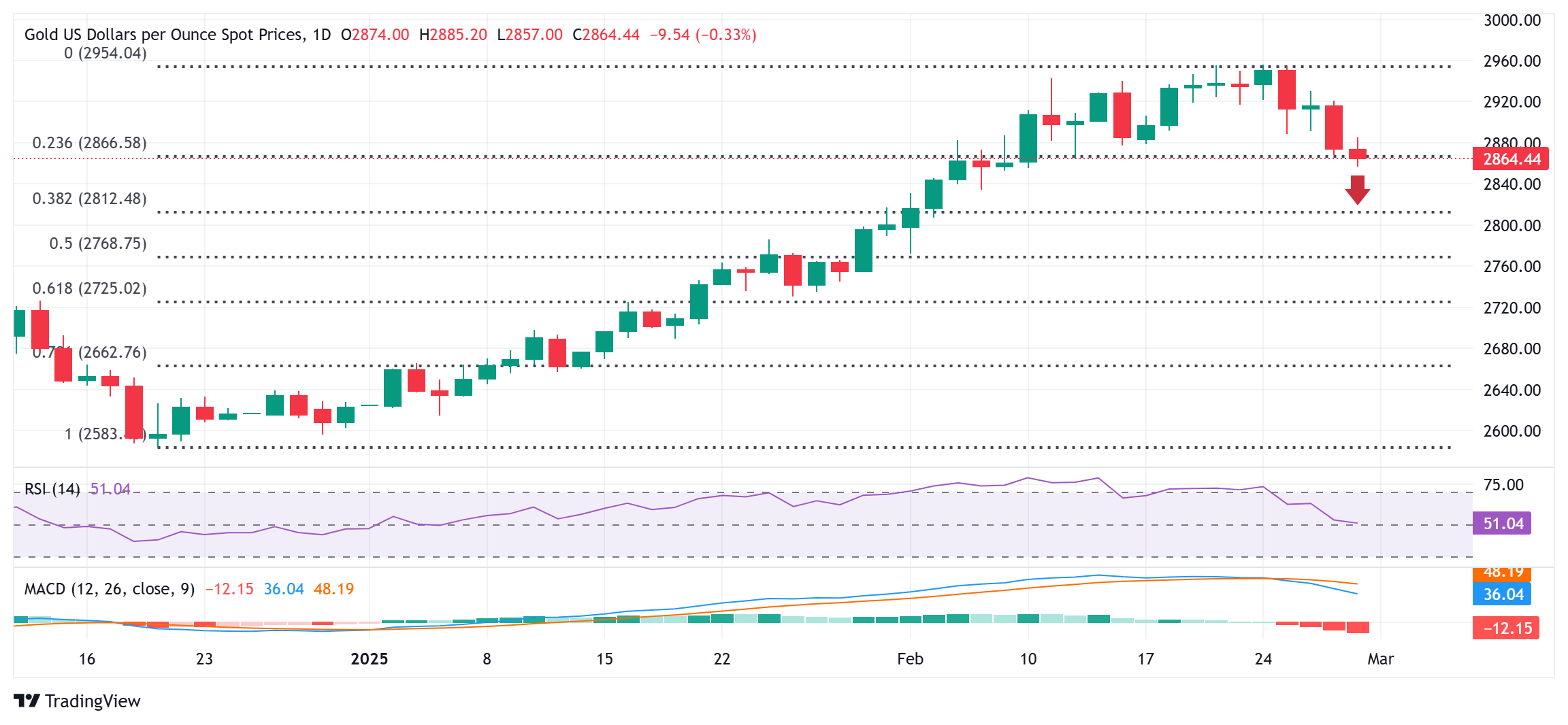
Gold US Dollar 1-D Chart as of February 28, 2025 (Source: TradingView)
Despite the recent slide, some analysts see strong technical support for gold at lower levels, particularly near $2,000 per ounce. Any signs of economic weakness or shifts in the Fed’s rhetoric could renew investor interest in gold, especially if concerns over slowing global growth resurface.
Geopolitical risks and broader market uncertainties also continue to play a role in shaping gold’s outlook. While the metal has struggled in recent sessions, safe-haven demand could return if equity markets show signs of volatility or if unexpected geopolitical developments disrupt risk sentiment.
For now, gold’s trajectory remains tied to US economic data and Fed expectations, with traders looking for clearer signals on whether the central bank will maintain its hawkish stance or begin laying the groundwork for future easing. Until then, gold is likely to remain under pressure, tracking dollar strength and interest rate expectations.