






The British pound slipped against the U.S. dollar, pressured by renewed dollar strength as global markets reacted to a broad-based tech sector sell-off. The shift in risk sentiment drove investors toward safe-haven assets, lifting the greenback while weighing on risk-sensitive currencies like the pound.
The market turmoil followed sharp declines in technology stocks, with investors reassessing valuations amid rising interest rate concerns. As risk appetite faded, demand for the U.S. dollar increased, pushing GBP/USD lower despite relatively stable UK economic indicators. The Federal Reserve’s commitment to keeping rates elevated added further support to the dollar’s rally.
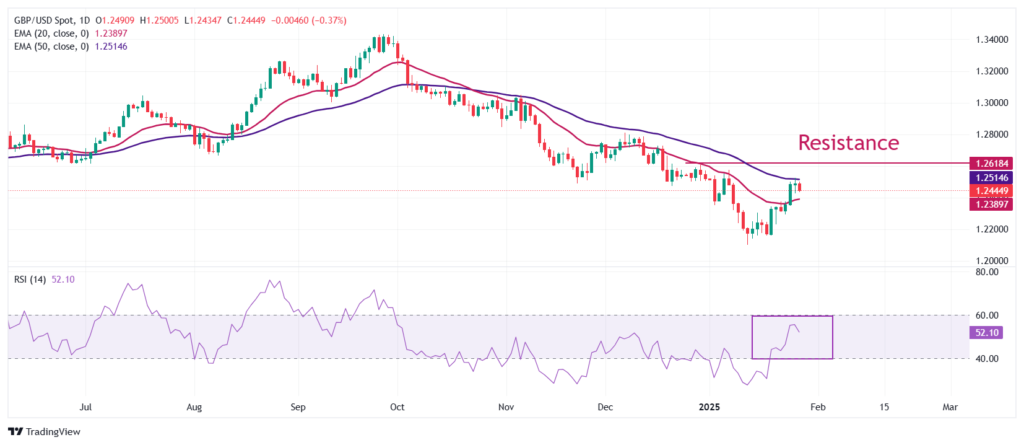
Meanwhile, UK economic data has shown resilience, but concerns over growth momentum persist. The Bank of England (BoE) remains cautious, balancing inflation risks with the potential economic slowdown. However, with monetary policy divergence between the BoE and Fed widening, the pound continues to struggle against the dollar’s dominance.
Looking ahead, traders will be watching U.S. economic reports, particularly inflation and labor market data, for further signals on Fed policy. Any indication of stronger economic activity could reinforce the dollar’s strength, keeping GBP/USD under pressure. On the UK side, BoE comments or signs of weaker economic performance could add to the pound’s downside risks.
For now, the pound remains vulnerable, with dollar strength and market uncertainty dictating near-term movements. Unless risk sentiment improves or the BoE signals a shift in stance, the GBP/USD pair could remain on the back foot in the sessions ahead.