





Gold prices remain above $2,900 per ounce, but upside momentum has stalled as investor risk appetite improves. After reaching fresh highs earlier this year, gold has struggled to extend gains, with traders shifting toward equities and other riskier assets amid signs of economic resilience.
The recent easing of market uncertainty has weighed on safe-haven demand, with investors reassessing their positions as major economies show stronger-than-expected growth. While concerns over inflation and geopolitical risks persist, the absence of immediate shocks has prompted some profit-taking in gold, capping its rally.
Another key factor limiting gold’s upside is the Federal Reserve’s monetary policy stance. While markets initially bet on aggressive rate cuts in 2024, recent economic data has reinforced expectations that the Fed will take a more cautious approach. Higher interest rates for longer reduce gold’s appeal, as the non-yielding asset competes with interest-bearing alternatives like bonds.
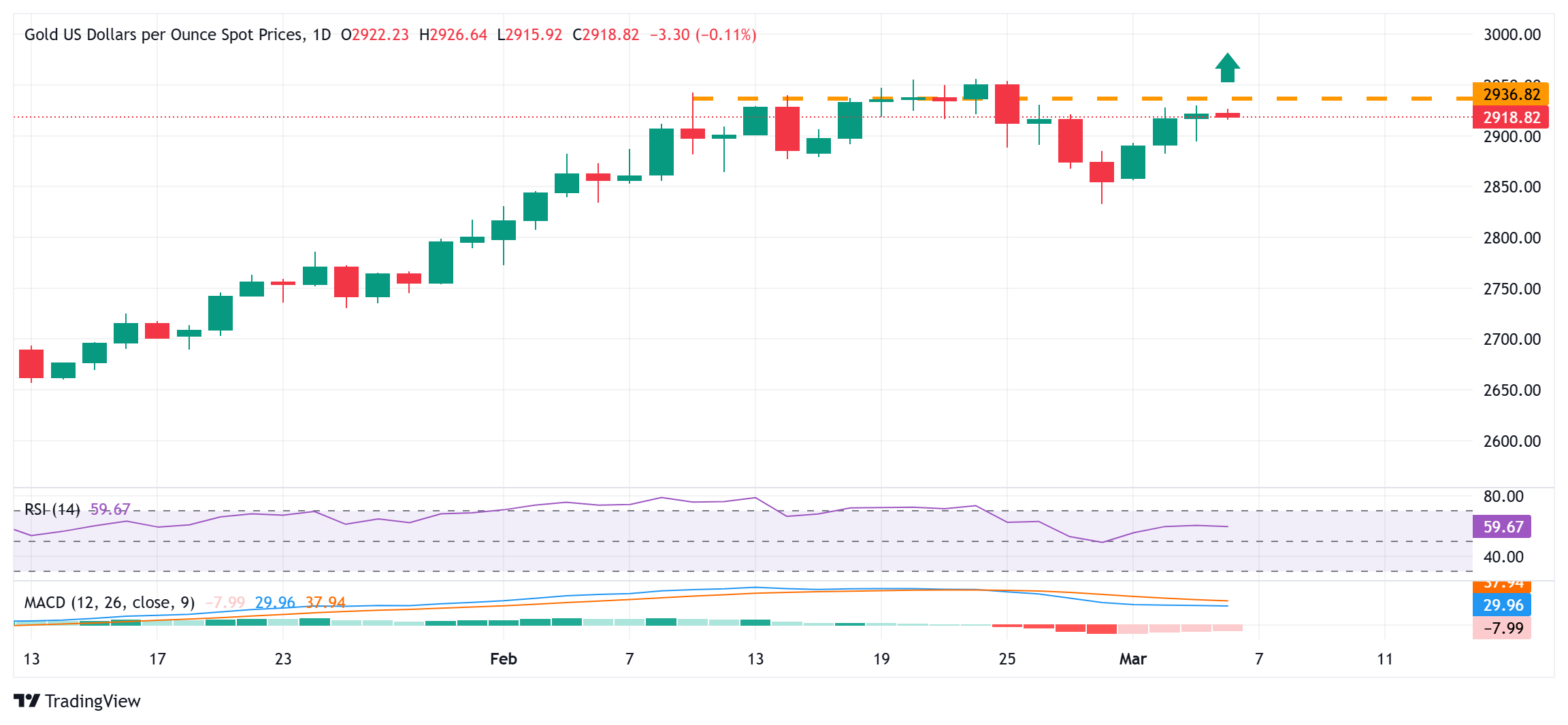
Gold US Dollar 1-D Chart as of March 06, 2025 (Source: TradingView)
At the same time, a weaker U.S. dollar has helped gold maintain its footing. The dollar index has struggled to gain momentum amid shifting Fed expectations, providing some underlying support for precious metals. Any renewed weakness in the greenback could give gold another push higher, though sustained gains may require fresh catalysts.
Meanwhile, demand from central banks and institutional buyers remains strong, with global reserves continuing to see allocations toward gold. This steady demand has helped gold hold near record levels, even as broader financial markets shift toward riskier investments.
Looking ahead, traders will closely monitor U.S. inflation data, Federal Reserve statements, and geopolitical developments for further direction. If economic uncertainty resurfaces, gold could see renewed upside. However, if risk appetite continues to strengthen, the metal may struggle to break meaningfully higher from current levels.